Let me stake out a position that's going to be unpopular in certain corners of the internet: AWS is fine.
Not "fine" in the "this is fine" dog-surrounded-by-flames sense. Fine in the sense that a company printing $132 billion annually with 29% market share doesn't need your sympathy, your (or my!) concern-trolling thinkpieces, or the breathless "is AWS dying?" takes that generate LinkedIn engagement from people who've never operated anything more complex than a Squarespace site.
But "fine" isn't the same as "dominant the way they used to be," and that distinction matters. So here's my framework for thinking about AWS in 2026–a set of positions I'll either look prescient or stupid for holding by December.
Position One: Stop Taking Azure's Growth Numbers at Face Value
I'm going to keep banging this drum until someone at Microsoft provides an auditable breakdown: we have no idea what "Azure revenue" actually means in any given quarter.
Microsoft has turned financial reporting into an impressionist painting. Depending on the earnings call, Azure variously includes or excludes chunks of Office 365, Dynamics, Power Platform, GitHub, and whatever else helps the stock price that afternoon. Their "Intelligent Cloud" segment contrasts heavily with the "Moron Cloud" that people tend to view Azure as after using it for half a day. Comparing Azure's 39% growth to AWS's 20% is like comparing your monthly spending to mine when I count groceries and you count "everything I did outside the house, plus vibes."
Yes, Azure is growing. Yes, the OpenAI partnership is generating real revenue. Yes, enterprises love buying from the vendor already extorting them for Office licenses. All of this can be true while also acknowledging that the specific numbers are marketing as much as accounting.
AWS added roughly $5.5 billion in quarterly revenue year-over-year. Google Cloud's entire quarterly revenue is $15.2 billion. AWS's growth is a third the size of Google's entire business. The denominator matters.
Position Two: Google Cloud Is the Actual Competitive Story
While everyone obsesses over the Azure comparison, Google Cloud quietly became the momentum play. Revenue growth accelerating every quarter–28% to 32% to 34%. Backlog up 82% year-over-year to $155 billion. More billion-dollar deals through Q3 2025 than in 2023 and 2024 combined.
Unlike Azure's financial origami, Google Cloud's numbers are relatively clean. They also come with a credible AI-native story that doesn't require a partnership with a company that periodically lights itself on fire in public.
If I were losing sleep at AWS, it wouldn't be over Azure's reported growth rates. It would be over Google finally figuring out how to sell to enterprises after a decade of trying.
Position Three: re:Invent 2025 Was AWS Admitting Reality
Three announcements at re:Invent represented strategic reversals that AWS spent years resisting:
Multi-cloud acceptance. AWS Interconnect now plays nice with Google Cloud and (presumably, soon) Azure. After a decade of AWS sales teams suggesting multi-cloud was a sign of organizational dysfunction, they're now building the interconnects. Welcome to 2019, folks.
Serious on-premises investment. AI Factories aren't Outposts with better marketing. They're a genuine acknowledgment that (reported) 21% workload repatriation and 86% of CIOs planning to bring something back on-prem isn't a blip–it's a trend. I'm skeptical whether this is real, since folks are talking about it a hell of a lot more than they are implementing it, but the reality matters less than AWS's clear reaction to the analysis.
Democratized model training. Nova Forge at $100,000 annually means custom model training is now accessible to companies that merely have money, rather than exclusively to companies that have "build a moon base" money. You still probably don't need to train your own models, but now it's just a typical line item expense rather than something your board is going to ask pointed questions about.
You can frame these shifts as pragmatic evolution or strategic capitulation. I lean toward pragmatism–AWS resisting obvious market demands for years was the aberration, and this is the correction. Let's not pretend these were the plan all along.
Position Four: The AI Gap Is Real but Overstated
Here's where I'll probably annoy people on both sides.
Yes, AWS was caught flat-footed on generative AI. The early Titan models were embarrassing. While OpenAI was capturing the imagination of every executive with a LinkedIn account, AWS was mumbling something about "purpose-built AI services" and hoping nobody noticed. Annoyingly, they seemed incapable of talking about anything else, given their propensity to talk the most about that which they are the most insecure.
But the current picture is more nuanced than "AWS lost AI."
Nova 2 is genuinely competitive at a pricepoint–it's no longer simply a punchline. Trainium3 delivers real performance at 3nm, and the custom silicon economics make sense: run Nova on Trainium at near-zero margin, undercut GPU-dependent competitors, reduce NVIDIA dependency. Project Rainier deployed nearly 500,000 Trainium2 chips with Anthropic, with a million on the horizon. That's not a science project; that's production infrastructure, albeit for a single company. It's going to be telling whether more companies adopt the pattern.
Bedrock has grown to nearly 100 serverless models with 4.7x adoption growth. The December expansion added 18 open-weight models in a single drop. Andy Jassy thinks Bedrock could be as big as EC2, which is either visionary or delusional, but either way suggests internal conviction.
The counterpoint: only 4.3% of Y Combinator's 2024 cohort uses Bedrock versus 88% using OpenAI. Startups aren't enterprises, but they're leading indicators; every enterprise salivates over being "like a startup." And Epic Games taking a $10 million project to Google Cloud because AWS couldn't provide sufficient Bedrock capacity is exactly the kind of loss that becomes a case study.
My position: AWS's AI capabilities are now credible. Their go-to-market and capacity planning are still catching up.
Position Five: The Talent Hemorrhage Is the Real Risk
This is the hill I'll die on, or at least whine a lot about, in 2026.
The October us-east-1 outage took a disturbing length of time to identify DynamoDB as the culprit and communicate that to customers. This is disturbing for a company that built its reputation on operational excellence, and whose entire pitch to enterprises is "we know how to run this stuff so you don't have to."
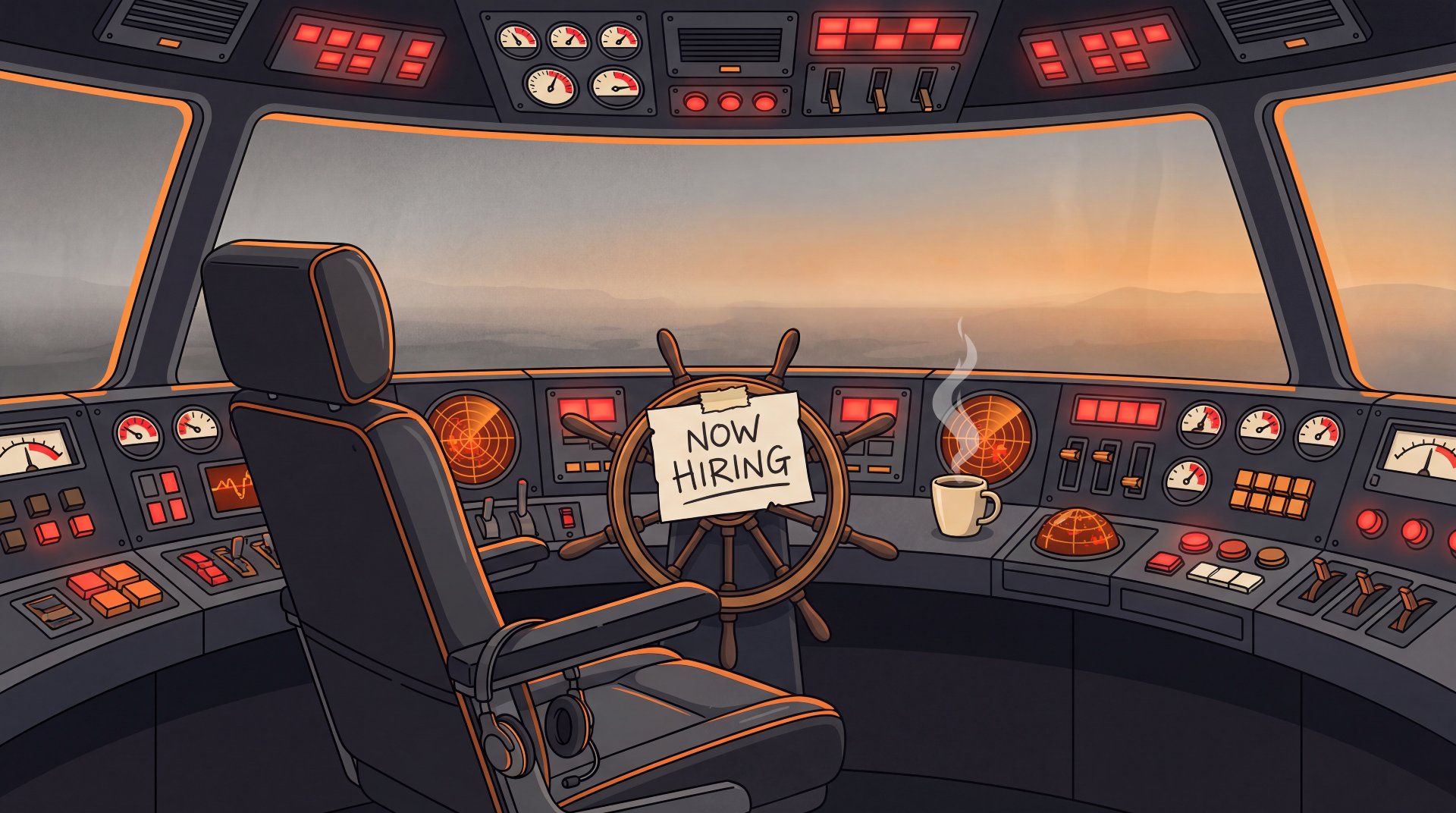
Internal documents reportedly show 69-81% "regretted attrition"–meaning the people leaving are the ones Amazon desperately wanted to keep. Where have the senior engineers who've been through this dance before gone? They've walked out the door with decades of hard-won knowledge about how AWS's systems actually work when everything's on fire at 3 AM.
You cannot replace institutional knowledge with headcount. Amazon hired 4,000 new AI researchers while cutting approximately nearly 14,000 managers. That might look great on a spreadsheet, but whether it looks great during the next cascading failure is a different question.
AWS's competitive moat was never just the services; it was the operational expertise that let them run those services at a scale nobody else could match. If that expertise is walking out the door, the moat is draining. And unlike market share erosion, you won't see this in the quarterly numbers until something breaks badly enough that everyone notices.
Position Six: 2026 Is About Execution, Not Strategy
AWS's strategy is finally coherent. They've got the custom silicon. They've got the models. They've got AgentCore for the agentic future Matt Garman promised (as well as a disturbingly unheralded for how good it is Strands SDK). They've made peace with multi-cloud and on-prem reality. The strategy document is complete.
None of it matters if they can't execute.
Execution isn't a press release. It's not a re:Invent keynote. It's not a Leadership Principle, and it's not something you can directly mandate. It's thousands of individual decisions made by teams who understand the systems deeply enough to make the right calls when the dashboards light up red. AWS spent twenty years building that capability. The question for 2026 is whether they've spent the last three years hollowing it out.
What I'm Watching
Here's how I'll evaluate whether I'm right or wrong by year's end:
Outage response times. Not just whether things break–everything breaks–but how quickly AWS identifies and resolves issues. The roughly 75-minute diagnostic time in October is the baseline. If that number improves, maybe the talent concerns are overblown. If we see more incidents like it, we'll know.
Trainium adoption beyond Anthropic. Right now it's a "multibillion-dollar business" serving "a small number of very large customers." For the custom silicon strategy to matter, that customer base needs to broaden significantly. Watch for third-party adoption announcements.
Bedrock capacity. Losing Epic Games to a capacity constraint is the kind of own-goal that compounds. Either AWS fixes the quota problems or we'll hear about more high-profile losses.
Google Cloud trajectory. If Google Cloud's acceleration continues–35%, 37%, 40%–the competitive narrative shifts permanently. AWS can dismiss Azure comparisons as apples-to-fruit-baskets, but Google's numbers are clean and their momentum is real.
The "boring" services. S3, EC2, RDS, Lambda–the workhorses that generate the bulk of AWS revenue. Any reliability issues here would signal systemic problems. Stability signals organizational health.
My Overall Take
AWS isn't dying. Heck, AWS isn't even struggling in any conventional sense. But the era of unchallenged dominance is over, and the company is navigating a transition that would challenge any organization: maintaining operational excellence while pivoting to AI, retaining institutional knowledge while restructuring, and growing a $132 billion business at rates that satisfy Wall Street.
They've made the right strategic moves. re:Invent 2025 demonstrated a company finally willing to accept market reality rather than insist the market was wrong. The AI investments are substantial and increasingly credible.
What I'm less certain about is whether they'll be able to retain the people who know how to deliver.
That's what 2026 will answer. And I'll be watching.